Core Features of an HRIS Application
Learn what each module does and how it supports your team's work
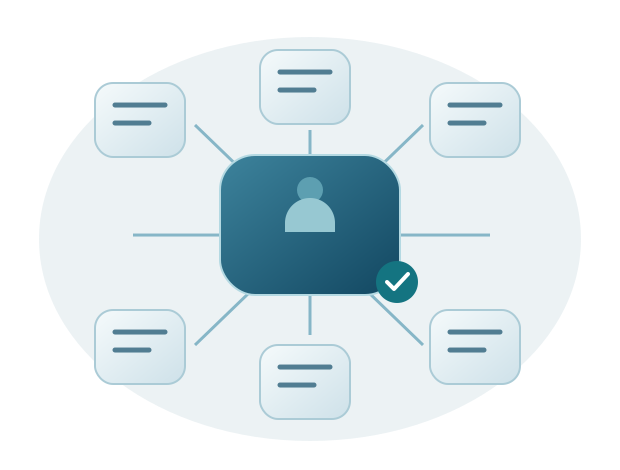
To understand HRIS features, start with the work you want to improve. HR may need to summarize attendance, calculate salaries, or track contracts. Those requirements help determine the modules needed, the data to prepare, and the people who will use them.
Employee records as the foundation of HR administration
The employee data module helps record employee numbers, positions, departments, assignments, and documents required by the company. Records need to reflect actual changes, such as a branch transfer or a new manager. HR decides who updates and checks changes so subsequent processes use the correct information.
Sigma HRIS and Forte HRIS provide features for organizational structures, positions, contracts, transfers, promotions, onboarding, and offboarding. Modules are prepared around company processes. For example, a transfer's effective date matters so attendance is not checked against an outdated location or schedule.
How attendance and payroll work together
Attendance management covers work schedules, attendance records, leave, authorized absences, corrections, and overtime. Each record needs to be checked against its source. A schedule shows when an employee is expected to work; attendance records show the times actually recorded. Discrepancies need investigation before the results are used.
Payroll uses the data and calculation rules prepared for the company. These include earnings, deductions, and changes during the current period. Sigma HRIS and Forte HRIS provide payroll within the HRIS application. Our team reviews configuration and testing requirements so the company can check calculations before using them.
Recruitment, performance, and training
HR responsibilities continue after an employee joins. Recruitment helps manage staffing requirements and candidates, performance management supports assessment of work results, and training develops skills. All three need clear objectives, rather than simply complete forms.
For example, an evaluation may show that a team needs to improve a particular skill. The result can inform training needs analysis, followed by a training plan and an evaluation of its outcomes. Sigma HRIS and Forte HRIS provide modules to support these processes. How they are used together needs to be discussed in light of the company's evaluation methods and development programs.
Employee services and gradual adoption
Employee Self Service gives employees access to services offered by their company. Business travel features support requests and expense administration. AI features can assist with tasks such as finding information, entering data, and attendance verification. The company still determines access, approvals, and result checks for the functions it uses.
Not every module has to be used on the first day. The Sigma team helps set priorities, prepare data, and train users for a fast yet structured implementation. After launch, we provide a commitment to support until issues are resolved. Sigma HRIS for on premises and private cloud deployment and the cloud based Forte HRIS continue to receive regular development informed by customer feedback and market needs.
Defining feature requirements through one HR task
An example connecting schedules, attendance, and payroll
Suppose the company wants fewer payroll corrections caused by schedule changes. Describing the requirement simply as payroll is not enough. The team needs to review schedule records, shift changes, attendance corrections, overtime approvals, and calculation rules. Each process has inputs and results used by the next process.
Record who creates schedules, who checks changes, and when the data is considered ready for payroll. Then request a demonstration using one shift change. Check the results before and after the change is confirmed. This shows whether the features address the actual problem, rather than merely looking comprehensive in a module list.
Separate launch requirements from later additions
Group requirements into those essential at launch and those that can follow. For each module, record the data needed, the responsible users, and other processes that must be ready first. If performance management will be introduced later, HR can begin preparing position structures and evaluation criteria. HR will then have the data and criteria ready when the next module is introduced. Users do not have to learn every module at once.
The Sigma team maps requirements for Sigma HRIS and Forte HRIS and explains the settings needed. The applications are flexible, and enhancements can be discussed if existing configuration options are insufficient. For each additional requirement, agree on process examples, scope, and expected test results. This keeps feature selection focused and gives users a clear reference when asking support for help.